am a resident of Chennai.. love to travel primarily to temples.. With the grace of Perumal, Thayaar, Azhwars and Acharyans.. this is a humble attempt to record my travels as a means to help others who intend to visit these wonderful places and gain the blessings of the Almighty
All of us are probably going through one of the toughest and challenging times of our life at this point as the second wave of the pandemic wreaks havoc upon us, our family, friends and all our near and dear ones. This is also probably the worst thing to affect this great country, Bharata, from the time of its Independence as well as everyone around the world. During all these times, what I feel will help us cross this is our steadfast faith in Perumal, Thaayar and all our Azhwars and Acharyans and along with that we being responsible by listening to the government’s instructions. Whenever we step out and if we have step out, please mask up properly, double mask as and when required, maintain social distancing and keep washing your hands from time to time.
Before this second wave started its dirty dance, by the grace of Perumal, Thaayar and all our Azhwars and Acharyans, I had the opportunity to visit one of my most favorite places, Kumbakonam (yet again), during the month of March for about 3 days along with my parents. It is only by Perumal and Thaayar’s eternal grace that this trip happened peacefully and without any issues. We stayed at the same Hotel Rayas Grand located oppposite to the Maha Maham tank inside Kumbakonam city. There are some temples which we visited inside and close to Kumbakonam which I have already covered in detail in my earlier post on my Kumbakonam temple visits so I will not be covering them again.
They include the Sri Sarangapani Temple, Sri Chakrapani Temple and the Sri Ramaswamy temple, The Thiruvarasu of Swami Thirumazhisai Azhwar which are all with in the Kumbakonam city. The other temples which we visited in the vicinity of Kumbakonam which I have again covered in my previous post include, Sri Oppiliappan temple, Sri Saranatha Perumal temple, Thirucherai and Nachiyar Kovil, the divya asthanam of Thirunaraiyur Nambi.
What I shall be covering this time are some of the temples which I covered in Mayiladuthurai district, which I have not covered before.
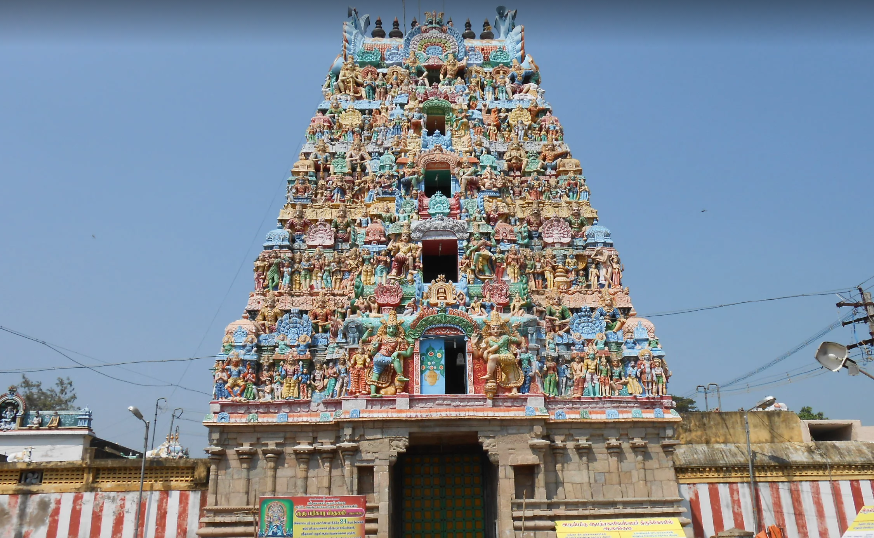
The first Divyadesam that we visited was the abode of Sthalasayana Perumal at Sirupuliyur. The google maps location of this temple is https://goo.gl/maps/ipLfFPpMqxQo8NKF8. This temple is located in a place 2 kms away from a place called Kollumangudi. Kollumangudi is located about 40km away from Kumbakonam and 10km from Karaikal.
Thirusiripuliyur Sri Kripasamudra Perumal Temple Image courtesy – Google Images Copyrights belong to the respective image owner/s
There are multiple legends associated with this temple. Before we get into that, here are some details of the Perumal of this temple. Here Perumal is in sayana thirukolam (sleeping posture) and is facing south. This is extremely rare because the only other sthalam where Perumal is in a sayana thirukolam facing south is Srirangam. The moolavar is known as Arumakadal or Sthalasayana Perumal or Sala Sayana Perumal, Moolavar Thaayar is known as Thirumamagal Naachiyar, Utsavar Perumal is known as Kripasamdura Perumal, Kripasamudra meaning the Lord who is an ocean of mercy and kindness and Utsava Thaayar is known as Dhayanayagi meaning the mother who is ever compassionate. The pushkarni or holy water body in this temple is called as the Maanasa Pushkarni and puranam of this temple can be found in the Garuda Puranam.
Thirusirupuliyur Sri Arumakadal Sala Sayana Perumal Image courtesy – Google Images Copyrights belong to the respective image owner/s
Once the great sage Vyagrapadar prayed to Lord Mahadeva to bless him with agile feet so that he could reach Srirangam from Chidambaram faster. The lord blessed him with Tiger feet but due to his old age and poor eye sight, the sage went in a different direction and reached Siripuliyur instead of Srirangam. Realizing he had reached another place instead of Srirangam and exhausted with his journey, the sage started his penance towards Perumal. Lord Mahavishnu, pleased with his penance appeared before him as Lord Ranganatha himself, gigantic and in sayana thirukolam. Since the sage’s eye sight was not good, Perumal reduced his size to a tiny form of Ranganatha which is called as Bala Sayanam. Being in a smaller form for the sage and worshipped by the sage with the legs of a tiger, the place came to be known as Siru (meaning small) Puli (meaning tiger) yur (meaning place) and hence Sirupuliyur. Inside the sanctum, we can find the vigraham of Vyagrapadhar near the divine feet of the Lord.
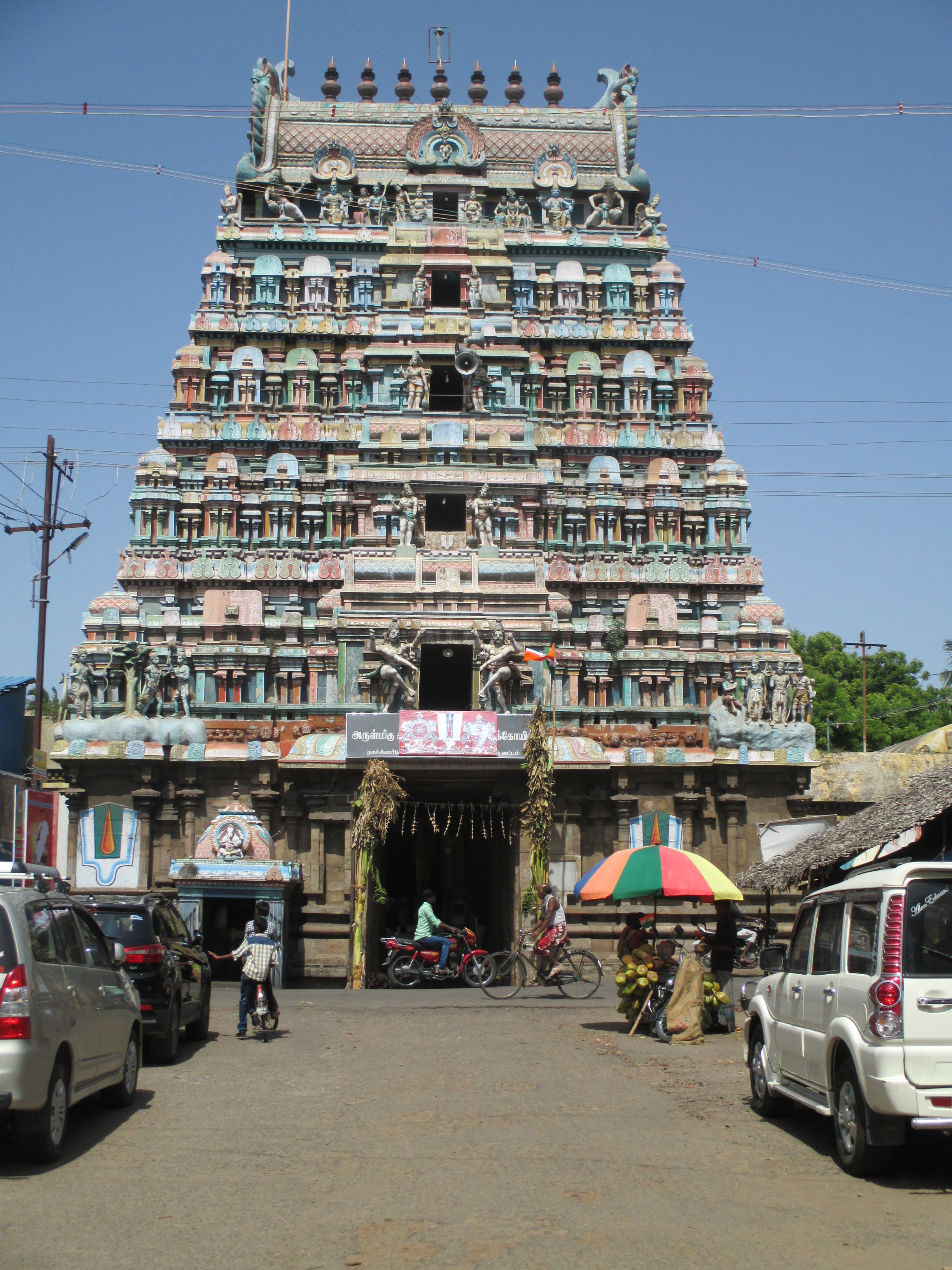
The next Divyadesam that we visited was the divine asthanam of Devadhiraja Perumal at Therazhundur. Google maps shows the location of this temple at https://goo.gl/maps/RLwKYxjrLU2XMwP7A. Therazhundur is a small village located around 10km from Mayiladuthurai.
Therazhundur Sri Devadiraja Perumal Temple Image courtesy – Google Images Copyrights belong to the respective image owner/s
There are multiple legends associated with this temple but before we go into them, let me share some information about the Perumal here.
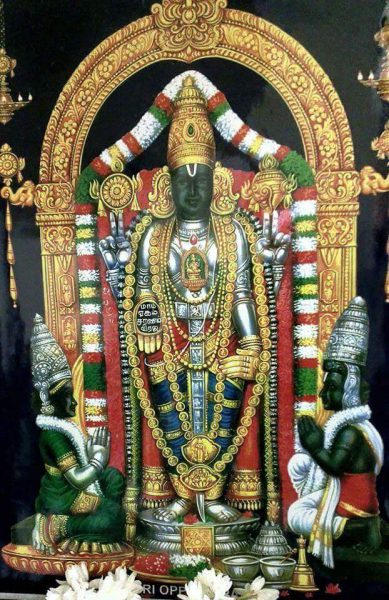
Therazhundur Sri Devadiraja Perumal Image courtesy – Google Images Copyrights belong to the respective image owner/s
Moolavar Perumal is known as Devadhiraja Perumal and is in a majestic standing posture or ninra thirukolam. Utsavar is known as Amaruviyappan, Gosakan. Thaayar is housed in a separate sannidhi and she is known as Sengamala Valli Thaayar. In the sanctum you can also find Moolavar flanked by Prahladan to his right and Periya Thiruvadi (Garudazhwar) to his left. Thirumangai Azhwar has sung 45 pasurams in the praise of this Perumal. This is also one of the 5 Krishnaranya kshetrams in the south, the others being Thirukannangudi, Thirukannamangai, Kapisthalam and Thirukannapuram which I have written about earlier.
How did this place get the name “Therazhundur”. The word “Ther” in Tamizh means chariot and “Azhundur” means pressed down deep and getting stuck. It so happened that King Uparicharavasu had obtained the boon of flying and was flying above this place. In an act of arrogance, as he flew above this place, the shadow of the chariot fell on the Rishi’s and the cows grazing here. Now the boon obtained by the King was so special that anyone on whom the shadow of the chariot fell would be harmed. Perumal wanting to teach the King a lesson in humility, pressed the wheels of the chariot that it came crashing down and got stuck. Any amount of effort to remove it failed. Hence the place where the chariot of Uparicharavasu got stuck came to called as “Ther-Azhundur”.
One more legend is that Prahaladan who had witnessed the Nrsimhavataram, an angry and aggressive form of Perumal wanted to see a softer version of Perumal and prayed to Perumal. Perumal gave sevai to him here as Devadirajan. We can even today see Prahaladan alongside Devadiraja Perumal inside the Sanctum.
Another reason why this khsetram has immense significance is because it is the birthplace of the famous Tamizh poet “Kamban” who has composed many magnificent literary works, the most famous being the Kamba Ramayanam. Today we can find a Kamban mandapam which has been built in the place where he used to live in Sannidhi street which is very close to the street.
Many of the houses in the agraharam have vanished over the years which is a very sad thing to note. Once we enter the temple we will definitely forget everything in the beauty of Devadiraja Perumal and Amaruviappan.
Our next stop has immense significance and importance for all Sri Vaishnavas. This is the divine asthanam of Sri Neelamegha Perumal. Located around 30kms from Kumbakonam, this magnificient temple is a must visit. The google maps location of this temple is https://goo.gl/maps/cVLPSYqKvwQHJV44A
Thirukannapuram Sri Neelamegha Perumal Temple Image courtesy – Google Images Copyrights belong to the respective image owner/s
Prior to going in to the various legends associated with this temple, let us look at the sanctum. Here Perumal is in a majestic ninra thirukolam (standing) posture flanked by Sridevi, Boodevi along with Dandaka Maharishi and Garudan.
Thirukannapuram Sri Neelamegha Perumal Image courtesy – Google Images Copyrights belong to the respective image owner/s
There are multiple legends associated with this temple. One of the important legends is how Utsavar Perumal helped a devout Bhattachar (Priest) of the temple who used to ardently serve him everyday. Ranga Bhattar used to offer a garland daily to the Utsavar, Sowrirajan and Perumal given to him by a courtesan. One day, the ruling king suddenly made a visit to the temple and found a hair in the garland offered to Perumal. When questioned by the King, Ranga Bhattar said that the hair in the garland belonged to Perumal himself. The King gave Ranga Bhattar a chance to prove himself else get punished for lying to him. Upon Ranga Bhattar’s earnest prayers, Perumal gave sevai with a Sowri kondai and it is there for all of us to witness to this day. The beauty of Sowrirajan is indescribable in words.
Another legend is that of Uparicharavasu whom I had mentioned about when talking about Therazhundur. The same King when flying over this divyadesam, mistook some sages to be demons in disguise and attacked them. the sages prayed to Perumal to protect them. Perumal came in the guise of a young boy and defeated Uparicharavasu. Once Uparicharavasu understood whom the young boy was, he offered his salutations and pleaded with him to marry his daughter, Padmini. We can find Padmini Thaayar even today inside the Sanctum.
One more legend is that Vibeeshanan, the brother of Ravana had prayed to Ranganatha Perumal of Srirangam that he would like to see his walking beauty as he had already witnessed the beauty of his sayana thirukolam (reclining posture). Perumal asked him to visit Thirukannapuram or Keezhai veedu to witness this. In Sri Vaishnava sampradayam, Srirangam is referred to as the Melai Veedu and Thirukannapuram as the keezhai veedu. To this day, to mark this occasion, on every Amavasya, Sowriraja Perumal comes out of his sanctum to provide darshan to Vibeeshanan.
One more unique feature of this temple when compared to any other divya desam of Perumal or even an Abhimaana sthalam is that, there is no Paramapada vaasal here. On the day of Vaikunta Ekadasi, Perumal appears through the Paramapada vaasal and blesses his devotees who yearn for a place in Sri Vaikuntam and pray to Perumal to grant them moksham (relief from the continous cycle of birth and death). In this temple, it is said that we offer our prayers at the holy feet of Sowrirajan who blesses you to directly enter Vaikuntam.
Lastly, the Pongal prasadam in this temple is very famous and is called the Muniyadharayan Pongal. It is said that a devotee who used to offer Pongal to Perumal everday was slightly delayed one day. By the time he came to the temple, the temple was closed for the night. With a heavy heart, he offered the Pongal outside the doors of the temple and left to his house. The next day when the temple doors were opened, the smell of sweet Pongal came from all corners of the temple. To mark this unique event, this special Pongal is offered to Perumal every night as naivedyam (offering).
Five Azhwars have sung praises of the Perumal of this divya desam including Nammazhwar, Thirumangai Azhwar, Kulasekhara Azhwar, Periyazhwar and Andal.
This temple is a must visit not only for every Sri Vaishnavan but everyone who wants to get the blessings of Neelamegha Perumal, Sowriraja Perumal and Thirukannapura Nayagi Thaayar. I sign off with the famous sloka dedicated to this kshetram
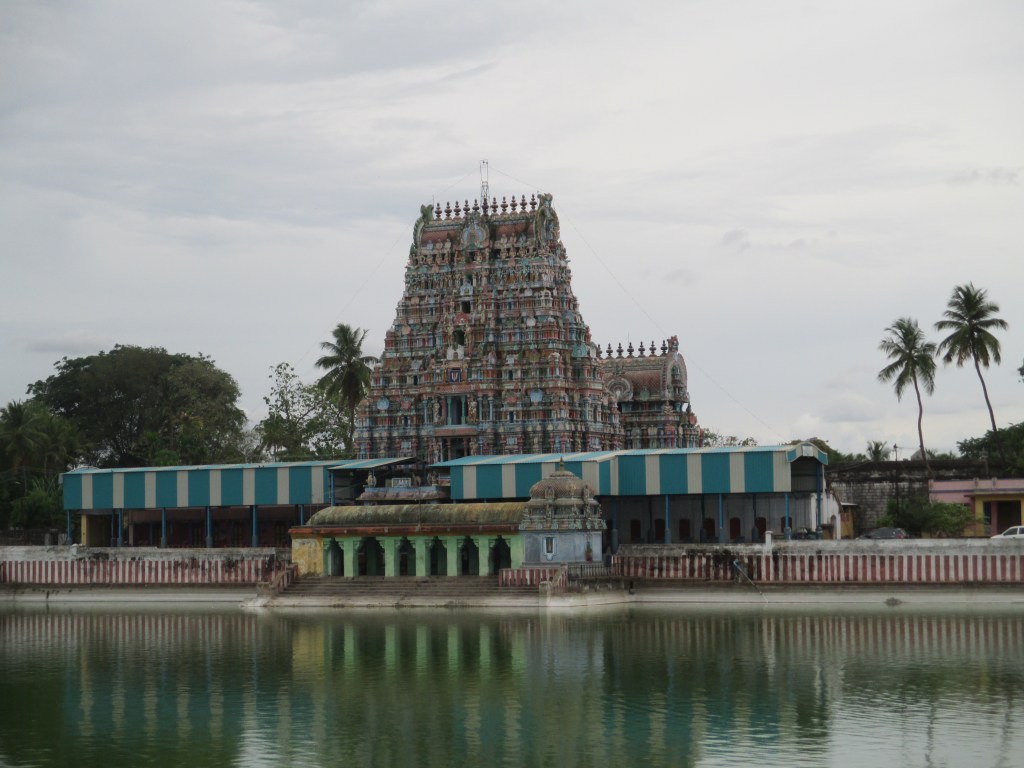
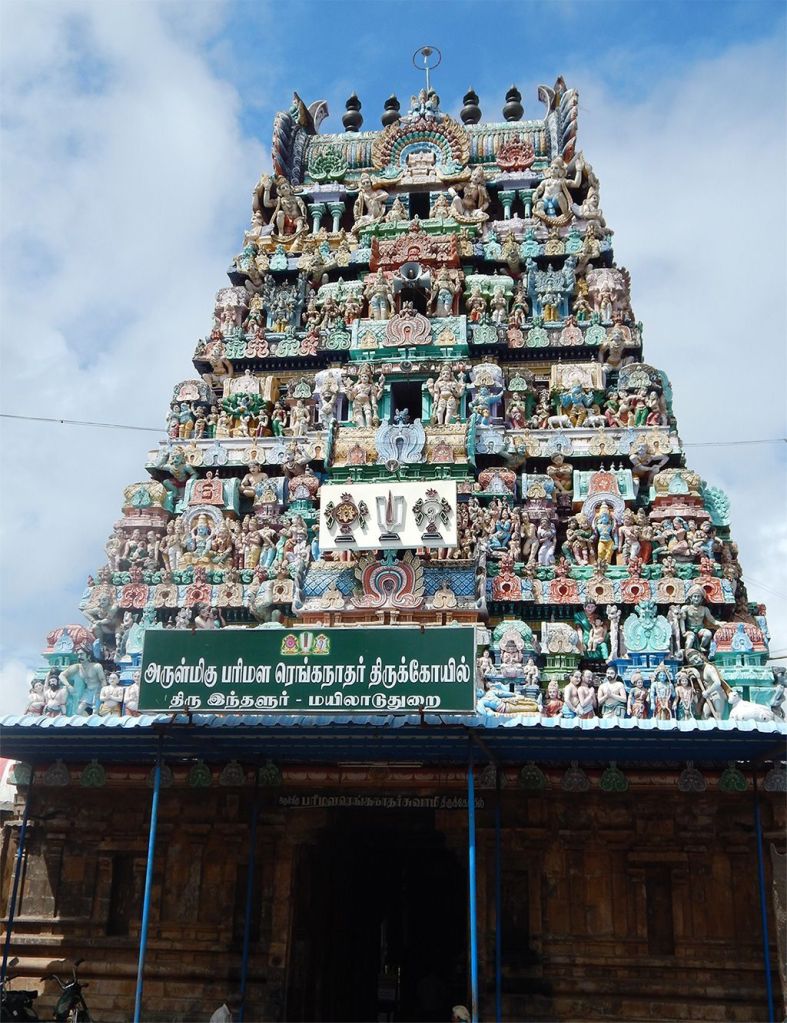
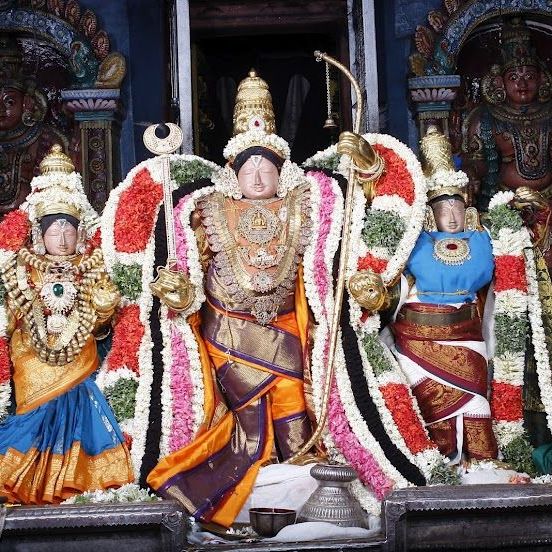
We next move on to the divine AsthAnam of one of the most beautiful Ranganatha’s whose beauty I was captivated by (of course no comparison to Periya Perumal). It is the temple of Parimala Ranganathan at ThiruIndalur. Here is the google maps link to the location of this temple https://goo.gl/maps/Tr9DFfixyFUKGXni9
ThiruIndalur Sri Parimala Ranganatha Perumal Temple Image courtesy – Google Images Copyrights belong to the respective image owner/s
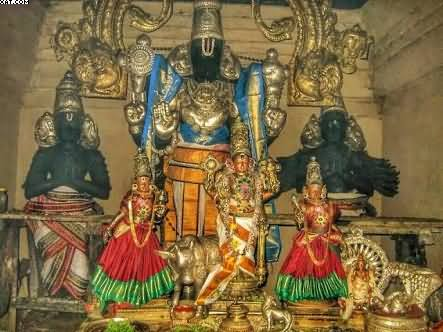
As always, before we go on to understanding the significance of this kshetram, let us have a look at the sanctum of the temple. Inside we have the majestic figure of Parimala Ranganathan in a sayana thirukolam (reclining posture). Inside the sanctum we have goddess Cauvery near his head, goddess Ganga next to him. Thaayar is housed in a different sannidhi (sanctum) and is called Parimala Ranganayaki. She is also called as Chandrasaapa Vimochanavalli and Pundareekavalli Thaayar.
ThiruIndalur Sri Parimala Ranganatha Perumal Image courtesy – Google Images Copyrights belong to the respective image owner/s
ThiruIndalur is revered as one of the pancha ranga kshetrams (5 Ranganatha temples). The five Ranganatha kshetrams include Adi Rangan at Srirangapatnam, Adya Rangan at Srirangam, Appalarangan at Koviladi, Parimala Rangan at ThiruIndalur and Vatarangan at Sirkazhi. Some sampradayas say that the Sarangapani temple in Kumbakonam where Perumal is in a reclining posture is also a Vataranga kshetram.
Legend has it that Chandra (the Moon god) was charmed by the beauty of Brishaspathi’s wife Tara and eloped with her in the absence of his Guru. When she was asked to return to her husband, it was found out that she was carrying a child. Brihaspathi cursed Chandra to be deformed saying that the biggest sin one can commit is caste one’s eyes on another’s wife. Along with this, Dakshan, was taken by Chandra’s handsome features and wanted him to marry his 27 daughters but Chandra had his eyes only for one daughter, Rohini and ignored the others. An angry Dakshan cursed Chandra that he would lose his good looks and youth. Now doubly cursed by two people, Chandra went to Brishaspathi and pleaded with him to get relieved from the curses. Chandra then performed penance after bathing at the sacred Theertham and invoked the blessings of Perumal. It is said that Perumal liberated him partially and asked him to continue his penance at Thalai Changa Naan Mathiyam, another divya desam that is close to Indalur where Chandra was completely relieved of his curses. Chandra then requested the Perumal of Indalur that the kshetram be named after him (one of Chandra’s name is Indu).
One more legend is that of Thirumangai Azhwar who had come to sing pasurams in praise of the Lord. Perumal to test Thirumangai Azhwar, closed the entranceway to the temple and did not open it inspite of repeated requests. An irate Azhwar said that history would say that the Perumal of Indalur did not allow Azhwar to sing a song. Finally Perumal opened the door to the temple and told Azhwar to sing his pasurams. Thirumangai Azhwar dedicated 10 pasurams (verses) in the praise of Parimala Ranganathar.
This is a wonderful must visit divya desam. Kindly do visit and get the blessings of Perumal and Thaayar.
After many years I decided to head back to one of my most favorite places on earth, Kumbakonam (traditional name Kudanthai or Thirukudanthai). I decided to drive down this time and took the scenic ECR road instead of the Chengalpatu-Villupuram route. We decided to start our journey on a weekday assuming traffic conditions will be relatively better and to our pleasant surprise it was. I did this journey with my parents hence we decided we were going to take it a little easy than usual in terms of number of temples and spend more time in each temple enjoying it maybe 0.1% of what our divine Azhwars and Acharyans would have experienced and enjoyed. When we drive down ECR road, the route would be as follows Pondy -> Chidambaram -> Cuddalore -> Mayavaram -> Kumbakonam.
If you were to do say decent speed and take may be 2-3 breaks, you should be able to comfortably cover this distance of about 350 odd kms in 5-6 hours. We had already booked our hotel in Kumbakonam at Hotel Rayas Grand. Rayas is centrally located inside Kumbakonam city. The Maha Maham tank is bang opposite to the hotel and most of the local temples are easily accessible from here. They have a restaurant inside the hotel itself which serves decent food. The rooms are very neat and well maintained and the staff are also very courteous and attentive. I would definitely give them a 4/5. The Rayas group has 3-4 hotels on the same road so when choosing your hotel, kindly be attentive when looking for Rayas Grand (if you are staying there). We landed sometime towards late afternoon, decided to stretch out a little bit and finish some of the local temples in the evening. Prior to checking in to the hotel, we had some delicious home like authentic south indian lunch at Mangalambiga Coffee and Tiffin Center. They are a very small place so there might be a need to wait sometimes but the taste is worth the wait.
Thirukundanthai Sri Sarangapani Swamy Temple Image courtesy – Google Images Copyrights belong to the respective image owner/s
The first temple that we visited was the Sarangapani Swami temple which is located right inside the city. The first thing that definitely has to catch your attention is the majestic rajagopuram of this temple which is the tallest in the city (considering there are literally hundreds of temples inside the city itself) and raises to a height of around 173 ft. Here the moolavar is called as Sarangapani and Thaayar is known as Komalavalli. The utsavar is known as Aravamuthan and he was adored as much as Namperumal by all our Azhwars and Acharyans. The moolavar perumal is in a reclining posture. This is one of among the 108 divya desams and is also supposedly one of the pancha ranga kshetrams (the others being Adi Rangan in Srirangapatnam, Sri Renganathar at Srirangam, Sri Appakuduthan at Koviladi and Sri Parimala Ranganathar at Thiru Indalur (Mayavaram).
7 Azhwars have sung divyaprabandhams in the praise of this Lord. Andal has sung 1 verse, Periazhwar has sung 3 verses, Boothathazhwar has sung 2 verses, Thirumazhisai Azhwar has sung 7 verses, Nammazhwar has sung 11 verses and last but not the least, Thirumangaiazhwar has sung 25 verses for Swami Aravamuthan or Aa-ra-amuthan as the Azhwars used to praise him. Thirumazhisai Azhwar in particular has a very strong connection to this Perumal. When Thirumazhisai Azhwar visited Sarangapani Perumal and seeing that the Lord was in a constant reclining posture, sang the following pasuram to Perumal
"Nadandha Kaalgal Nondhavo Nadunga Gnyalam Enamai
Edandha Mei Kulungavo Elangu Maal Varai Churam
Kadandha Kaal Parandha Kavirikkarai Kudaindhaiyul
Kidandhavaru Ezhundhirundhu Pesu Vaazhi Kesanae"
To oblige Thirumazhisai Azhwar, Perumal actally started to get up from his reclining posture. When he was half way up, Azhwar realizing his folly requested Perumal to kindly stop and not move any further and embarass him. To this day, at the Sarangapani temple, Perumal is neither in a full reclining posture nor is he sitting but is mid way. This is known as the “Utthana Sayanam” where Perumal was willing to listen to his favorite devotee. It is probably the only Vishnu temple where you would find Perumal in this posture. I can keep going on and on about Aa-ra-mudhan but then..let us move on to the next temple..
Thirukundanthai Sri Chakrapani Swami Temple Image courtesy – Google Images Copyrights belong to the respective image owner/s
The next temple which is very close to the Sarangapani temple is the Chakrapani Swami temple. While there are many temples where Sri Chakrathazhwar has a lot of prominence (like Thirumogur, Srirangam etc), this is the only temple where Sri Chakrathazhwar is the main deity. He is known as Chakrapani and Thaayar is known as Vijayavalli Thaayar.. the temple is another magnificent piece of architecture.. The access to the perumal sannidhi is through the Dakshinayana (middle of July to middle of January) or Uttarayana (middle of January to middle of July) vaasal.. you can find similar entrances at Sri Pundarikaksha Perumal temple at Thiruvellarai near Trichy. Depending on the time of the year you are visiting the temple, you can access the perumal sannidhi through either one of these entrances based on the time of the year. This is an abhimaana sthalam meaning that it is not a divya desam that was sung by the Azhwars but is only next to them in prominence and importance. If you have the time, do spend some time enjoying the wonderful architecture of this temple. We had a wonderful darshan here and moved on to our next temple.
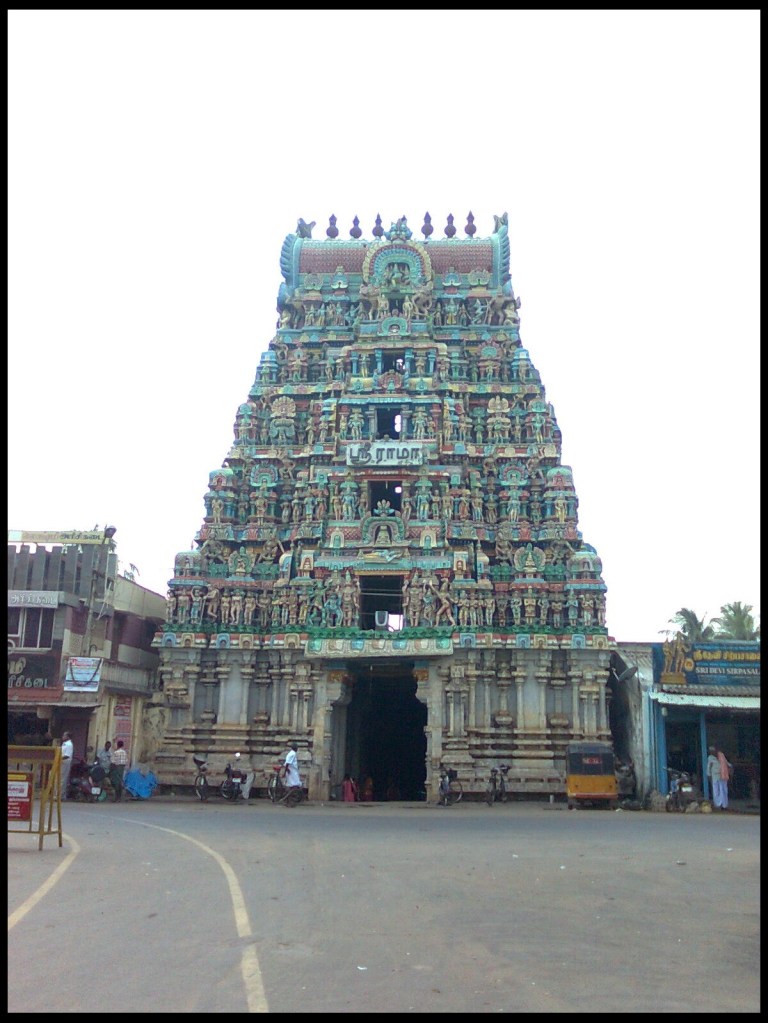
Thirukundanthai Sri Ramaswamy Temple Image courtesy – Google Images Copyrights belong to the respective image owner/s
The next temple which is right inside the city is Sri Ramaswamy temple. This temple was built in the 16th century by the Nayaka Kings. It is a wonderful temple well known for its intricate architectural work and beautiful paintings. In the main sanctum sanctorum, we have the entire family of Lord Sri Rama in a sitting posture with Thaayar. The depiction of Lord Rama is in his pattabhishekam or coronation posture with Sita Piraati. He is flanked by his brothers, Lakshmana, Bharata and Shatrugnan with Lord Anjaneya at his holy feet. I have never seen such spellbinding moola vigrahas that too in this kolam of Perumal in any other temple. The only other place where Sri Rama is in a very different kolam is at Maduranthakam Eri Kaatha Ramar Kovil where Perumal, who is known as Karunakaran is holding Sita Piraati’s hand.
Thirumazhisai Azhwars Thiruvarasu – the next place which we was purely based on some random videos I came across on the internet and some known sources in Kumbakonam was the Thiruvarasu (Jeeva Samadhi) of Thirumazhisai Azhwar which is very close to the Ramaswamy temple. While there are no authentic resources like any Kalvettu (inscriptions) to verify this, I had many of the locals testify that this is the place of his Jeeva Samadhi. For people who are unaware about Thirumazhisai Azhwar, his place of origin (birth) was Thirumazhisai which is on the road en-route to Tirupathi from Chennai. You can find his beautiful sannidhi inside Sri Jagannatha Perumal Temple at Thirumazhisai. Thirumazhisai Azhwar is believed to be the incarnation of the Sudharshana Chakra of Perumal. He was not only one amongst the Azhwars but was also an accomplished Yogi/Siddhar who is supposed to have lived for around 4700 years (as mentioned in his vaazhi thirunamam). It is said that chanting the below simple sloka of Thirumazhisai Azhwar can protect us from any negative energy, spirts etc
Post this, we decided to break for the day since the next day we planned to take a ride up to Mannargudi.
Vaduvur Sri Kothandaramar Temple, Sri Kothandaramar Utsavar Image courtesy – Google Images Copyrights belong to the respective image owner/s
Our first stop for the day was at the beautiful Sri Kothandaramaswamy Temple, Vaduvur. Iam delighted to write about this temple as this is my ancestral place of origin (poorveegam). Unfortunately there is no Wikipedia page for this temple available at this time but I will share as much details as possible here. Vaduvur is located between Thanjavur and Mannargudi. If you are coming from Thanjavur, you can drive towards Mannargudi and reach Vaduvur where the approximate driving distance is about 24 kms. Mannargudi is around 14 kms from Vaduvur which was were we headed to after finishing Vaduvur.
The temple is not very big in size but the moment we set our eyes on the utsavar moorthi of Sri Rama, it is an absolute sight to behold. You just cannot take your eyes of him. According to the history associated with this place, Lord Rama was returning to Ayodhya after the 14 years of exile and the war in Lanka. This place was where many Rishis had their hermitages. Lord Rama stayed here for a short while and when it was time for his departure, the Rishis were in no mood to let him go and wanted him to stay back forever. Lord Rama mentioned that since he had promised his brother Bharata that he would return to Ayodhya he would not be able to stay there. He however asked Vishwakarma to create a beautiful vigraham of himself and left it with the Rishis. The Rishis were hypnotized by the beauty of this archya vigraham and allowed Lord Rama to proceed to Ayodhya. This place is hence also known as Dakshina Ayodhya or Ayodhya of the south.
Mannargudi Sri Rajagopalaswamy Temple, Sri Srividya Rajagopalan Utsavar Image courtesy – Google Images Copyrights belong to the respective image owner/s
From Dakshina Ayodhya, it was time to head to Dakshina Dwaraka or the Dwaraka of the South. A temple I had been yearning to visit for many years was the Sri Srividya Rajagopalaswamy temple at Mannargudi. Like the Sarangapani temple at Kumbakonam. What will immediately wow visitors to this temple is the magnificient gopuram which stands at an imposing 192 ft. The temple is spread across nearly 23 acres. The Pushkarni or the holy water body attached to the temple is called the Haridhra Nadhi (Haridhra river) because it as big as a river. The main deity is Sri Rajagopalaswamy and Thaayar is known as Sengamala Thaayar. This temple was initially built by the Chozhas but was then expanded to what it is today by the Nayaks. The archya vigraham of Perumal is beautiful as a young cowherd Gopala, affectionately playing with his cows. A sight to behold.
It is very surprising that none of the Azhwars have sung any verses in the praise of this Lord but there are two legends associated with it. One legend says that Thirumangai Azhwar was instrumental in building the massive Dwajasthambam (flag staff) in the temple but why he failed to sing any pasurams praising the lord is answered by the second legend which says that the Azhwars were rendered speechless by the beauty of Lord Krishna that they did not have any adequate words to sing in praise of him. The history behind this Abhimana sthalam is that two sages Gopillar and Gopralayar were on their way to Dwaraka to offer their prayers to Lord Krishna when he was there but on the way, they happened to come across Sage Narada who told them that Lord Krishna had finished this Janma and had decided to return to Paramapadam. They were extremely upset and prayed to him and when Lord Krishna indeed appeared before them, they wished to see him as a young cowherd playing with his cows. Their wish was granted and is also there for all of us to see today. The temple has some brilliant architectural work but I wish it was kept a little more cleaner, thanks to HR&CE who seemed to have a well equipped room for themselves inside the temple.
AlangudiSri Aapathsahayeshwarar Temple, Sri Guru Sthalam Image courtesy – Google Images Copyrights belong to the respective image owner/s
The last temple that we visited for the day was the Sri Aapathsahayeshwarar temple at Alangudi, better known world wide as Guru Sthalam or the abode of Guru Bhagavan in the form of Dakshinamurthy who is one of the nine planets. Lord Shiva is worshiped as Sri Aapathsahayeshwarar and Ambal is known as Elavarkuzhali Ammai.
This temple is a paadal petra sthalam (equivalent of a divya desam for Sri Vaishnavites) as Thirugnanasambandhar has sung in the praise of this Sthalam/Lord. This apparently is also one of the 5 Aranyam (meaning forest) Kshetrams. The 5 kshetrams being
– Sri Mullaivananathar – Mullai Vanam – Thirukarugavur – Sri Satchi Nathar – Paadhri Vanam – Avalivanallur – Sri Paathaleeswarar – Vanni Vanam – Thiru Aradaipperumpazhi – Aridwaramangalam, Thiruvarur – Sri Aabathsahayeswarar – Poolai Vanam – Alangudi – Sri Vilvaneswarar – Vilva Vanam – Thirukalambur
The temple is crowded with devotees usually but more so during the Guru Peyarchi festival where devotees come in thousands to pray and get the blessings of Guru Dakshinamurthy.
With this temple, we decided to head back to the hotel and prepare for our next set of temples in the afternoon.
Sri Oppiliappan Temple, Thiruvinnagaram (Thirunageswaram) Image courtesy – Google Images Copyrights belong to the respective image owner/s
After a nice lunch and a quick nap, we started our journey in the afternoon to 3 more temples. The first stop was at Sri Oppiliappan Temple at Thiruvinnagaram or Thirunageswaram. The Perumal here is known by many names like Uppiliappan, Oppilla-appan, Thiruvinnagarappan, Thannopparillappan etc and Thaayar is Bhoomidevi. The Perumal here is also considered as the elder brother of Lord Srinivasan of Tirumalai. This temple is one amongst the 108 Vaishnava divadesams and Nammazhwar, Peyazhwar and Thirumangaiazhwar have sung pasurams dedicated to the Perumal of this divyadesam. Nammazhwar has sung 11 pasurams, Peyazhwar has sung 2 pasurams and Thirumangai Azhwar has sung 34 pasurams in the praise of this Perumal. According to the puranas, Tulasi did penance to Perumal that she should be close to him always. Perumal blessed that she would be born at Thiruvinnagaram and Mahalakshmi Thaayar would be born in her lap. Markandeya Maharishi who was living in this kshetram, did penance to Perumal and wished that Thaayar (Mahalakshmi) would be born to him as his daughter. His prayers were answered and Thaayar appeared as a small baby right under the Tulasi plant as promised by Perumal.
As Thaayar grew up and attained adolosence, it was Markandeya Maharishi’s wish that he should get Thaayar married to Perumal. Perumal appeared in the form of an old man at Markandeya Maharishi’s ashram and asked for the hand of his daughter. An astonished Markandeya Maharishi mentioned that his daughter was very young and did not even know the amount of salt she had to add in the food she cooks. The old man replied that he is willing to eat his food without salt but he would not leave without marrying the girl. Now Marakandeya Maharishi was in a fix and prayed to Perumal to save him from this situation. The old man then regained his original form and stood in front of Markandeya Maharishi in his full glory. A thrilled Markandeya Maharishi gave his daughters hand in marraige to Perumal. To this day, none of the prasadam offerings in the temple contain salt. The pushkarani or holy water source of this temple is known as the “Ahoratra Pushkarani”. Legend has it that a King was once cursed by a Sage as he had consummated with the Sage’s daughter. The Sage cursed that the King would turn in a to a bird and would be liberated from his curse in this holy water source. One night when the King, who was now a bird was sitting on a tree above the pushkarani, there was a severe storm. The branch on which the bird was sitting broke and fell in to the pushkarani and the King regained his original form. Since, the King was absolved of his curse in the night, this is the only kshetram where you can have a dip in the holy pushkarani even in the night and it is also supposed to have healing properties. A must visit place if you are here.
Sri Saranatha Perumal Temple, Thirucherai Image courtesy – Google Images Copyrights belong to the respective image owner/s
The next temple we visited was Sri Saranatha Perumal Temple at Thirucherai. The Perumal here is known as Saranatha Perumal and Thaayar is known as Saaranayaki.
Thirucherai is a village in the outskirts of Kumbakonam. The driving distance is about 15kms from Kumbakonam city and under ideal conditions we should be able to reach the temple in about 30-35 minutes. As per legend, during the end of a yuga and when it was time for the new world, Brahaspathi was very worried that all the necessary tools necessary for the creation of the new world needed to be safe guarded. Perumal instructed him to create a pot from the mud of the Saara Pushkarni (holy water body associated with this temple). Hence, this place also came to known as Saara Kshetram. The temple was maintained and taken good care of by the Chozhas, kings of the Vijaynagar empire and the Nayaks of Madurai.
This temple is one amongst the 108 divya desams with Tirumangai Azhwar singing 11 pasurams in the praise of the Lord of this divya desam. The temple is also known as the Pancha Saara Kshetram because of the five divine elements of Perumal (Saranathan), Thaayar (Saranayaki), Sara Vimanam (Tower), Sara Kshetram (the holy land) and Sara Pushkarni (water body). Saranatha Perumal stands handsome and tall in the sanctum sanctorium at around 12 ft in ninra thirukolam (standing posture) along with Cauvery Thaayar and Markandeya Maharishi.
Sri Thirunaraiyur Nambi Perumal Temple, Nachiyar Kovil Image courtesy – Google Images Copyrights belong to the respective image owner/s
The last and final temple we covered on this trip was Nachiyar Kovil or the temple of Thirunaraiyur Nambi and Vanchulavalli Thaayar. It is ideal to cover Thirucherai and Nachiyar Kovil together when travelling from Kumbakonam as they are quite near to one another. Nachiyar Kovil is about 6.5km from the Thirucherai temple. The temple is believed to have been initially built to its current state by Kochenghat chozhan with later contributions coming from his descendants and the Vijayanagar Kings.
Medhavi Maharishi used to reside in this place and undertook penance wanted Thaayar Mahalakshmi to be born as his daughter. She was born under a Vanjula tree (common name – Asoka Tree) and hence was called Vanjulavalli by the Maharishi. Perumal appeared before the Rishi in 5 different forms, as Sangarshanan, Pradyumnan, Anirudhan, Purushothaman and Vasudevan and asked for the Rishi’s daughters hand in marraige. Medhavi Maharishi glad agreed but on one condition that in this kshetram, all the first rights would be given to his daughter and not Perumal.
First of all, there are divyadesams where Thaayar has more significance over Perumal and is given first precedence in all aspects, be it the daily prasadam that is prepared or taking the lead during veedhi porapaadu (procession) of Thaayar and Perumal. Apparently, Perumal mentioned that in Kali Yuga, it is ideal to listen to women (am surprised that it is only Kali Yuga :)). Hence, he decided he would start off by being an example of that himself. Also, he had to keep his word to Medhavi Maharishi as well. Similar practice where Thaayar is given more precedence is followed in three other temples apart from Thirunaraiyur. The three other temples are Andal temple at Srivilliputhur where Andal takes the lead over Rangamannar, Azhagiya manavala perumal temple at Woraiyur where Kamalavalli Nachiyar takes the lead and Sri Pundarikaksha Perumal temple at Thiruvellarai which is close to Trichy where Pankajavalli Thaayar takes. While Srivilliputhur is known as Nachiyar Thiru Maaligai, Thirunaraiyur is rightly known as Nachiyar Kovil.
While Perumal and Thaayar are famous, crowds throng to the temple to see the massive saligrama moorthi of Sri Garudazhwar, the divine bird who is the transport of Perumal. Garuda here has a separate shrine all for himself right outside the main sanctum sanctorium. The Kal garudan utsavam happens during the months of Margazhi (Dec-Jan) and Panguni (March-April). It is magical to watch because the Kal Garudan himself is taken in a procession from his sanctum. Initially 4 people bring the idol of Garudan from his shrine, the number exponentially increases as they descend the stairs for the procession. The number goes from 4 to 8, 16, 32, 64 and finally 128 people are required to carry this idol and the numbers decrease in the same fashion when he is finally brought back to his sanctum. Legend has it that once the sculptor who was sculpting this magnificient idol finished sculpting it, Garuda started to fly away. The sculptor threw a stone at the bird which hit the bird on its nose. Garuda then obliged and said he would stay back in this divya desam. During the Kal Garuda seva utsavam, Garuda receives ornaments and dresses from the presiding deity Sri Srinivasan (Naraiyur nambi) and he also receives the same from Sri Renganatha Swamy of Srirangam.
Last but not the least, we will have to talk about the connection between Thirumangai Azhwar and Thirunaraiyur Nambi. All Sri Vaishnavites are eternally grateful to Sri Thirumangai Azhwar because without him, there would be no 108 divya desams today. While I do not want to go deep in to the story of this great devotee of Perumal, his connection to this place needs to be mentioned. In his younger days, Thirumangai Azhwar or Kaliyan as he was known then was a wild man. He was a military commander for a Chozha king and even got to rule a small territory called Ali Naadu for his tremendous military prowess and this territory’s capital was called Thirumangai, hence he got the name Thirumangai Mannan. He fell in love with a girl called Kumudavalli who agreed to marry him on two conditions. One was to feed over a thousand people per day for a year and secondly have his pancha samaskaram performed. All Acharyas were scared to perform pancha samaskaram for Thirumangai Mannan as he his very presence was fierce. Finally he reached the holy abode of Thirunaraiyur Nambi who performed the pancha samaskaram for Thirumangai and initiated him in to the Sri Vaishnava tradition. Thirumangai Azhwar dedicated nearly 110 pasurams just for Thirunaraiyur Nambi. Hence, this temple is significant in multiple ways and definitely calls for a visit if you are planning a Kumbakonam temple visit.
With the Pandemic currently, I have not had any chance to visit any temple obviously because they are all closed. This post has been due for a long time now and somehow have finally managed to finish it.
While I eagerly wait to hit the road again, my sincere prayers to Thaayar and Perumal to protect all of us during these trying times.
Madurai is a city that has been largely fantasized and portrayed in many Thamizh movies as a city filled with violent gangsters wielding huge aruvals and running around hacking people. Well, it is also a beautiful city which is said to be home to the golden Sangam period and sometimes also called the home of Thamizh. Well let us leave all these fantasies aside and explore this beautiful place for its rich temples and varied heritage.
I had long been planning a trip to Madurai and that finally came true very recently. A couple of friends and myself decided to visit the Madurai-Thirunelveli belt and explore some wonderful and ancient temples that had been visited and sung beautifully by our great Azhwars and Acharyans. While not every temple was a divya desam, we also visited some other temples for their beauty and tremendous energy.
I thought what other way than to start a blog and make notes of my travels. This blog will not only cover my outstation visits but also visit to local temples. I will try to provide some background on the temple based on my limited knowledge with support from wikipedia as well. I will also try to provide some information on travel, some history of the temple, some directions to get there plus some links to affordable hotel accommodations which can help anybody getting there.
We started off from Chennai Egmore and took the Pandian express which leaves at around 9:45pm IST. It is a fairly comfortable timing for folks who want to hop on a train after completing their day. It is normally scheduled to reach Madurai at 05:30am IST the next day morning but am told it reaches there before time and it did. We reached Madurai station at around 5:15am IST, 15 minutes before scheduled time.
There are many small, medium and large hotels very close to the Madurai railway station. Since we were all boys and just wanted to a quick place to shower and change before starting off our road trip, we booked in to a small lodge that was recommended by one of my friends who is quite familiar with Madurai city.
Iam not able to recommend any cabs or cab services for now since we used the car and driver services of my friend who was a native of Madurai and did a fantastic job of taking us around for the next 3 days. Iam sure there are some cab services that might be definitely available that can be arranged by the hotels you stay in or can be arranged on your own. There are many cab operators also available on a package basis.
Narasingam Sri Yoga Narasimhar Temple Image courtesy – Google images Copyrights belong to the respective image owner/s
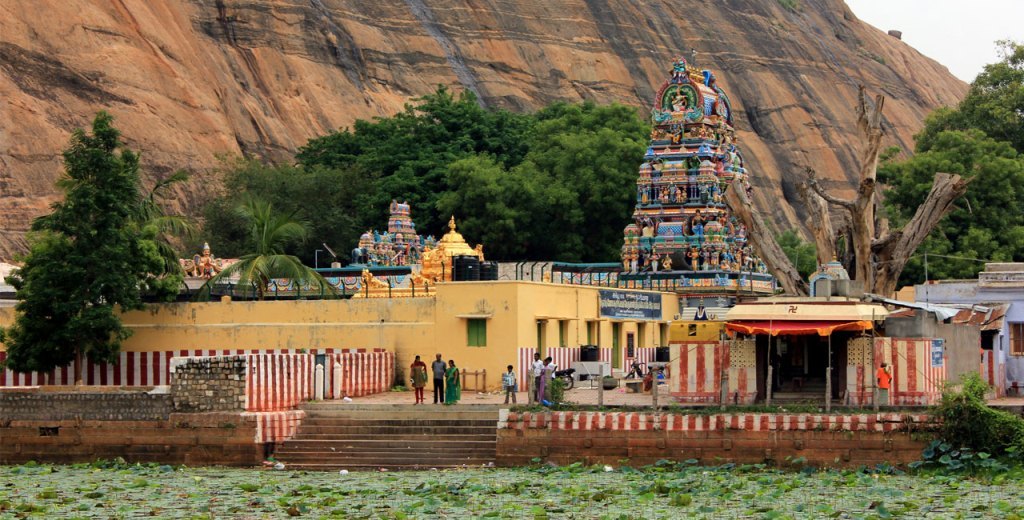
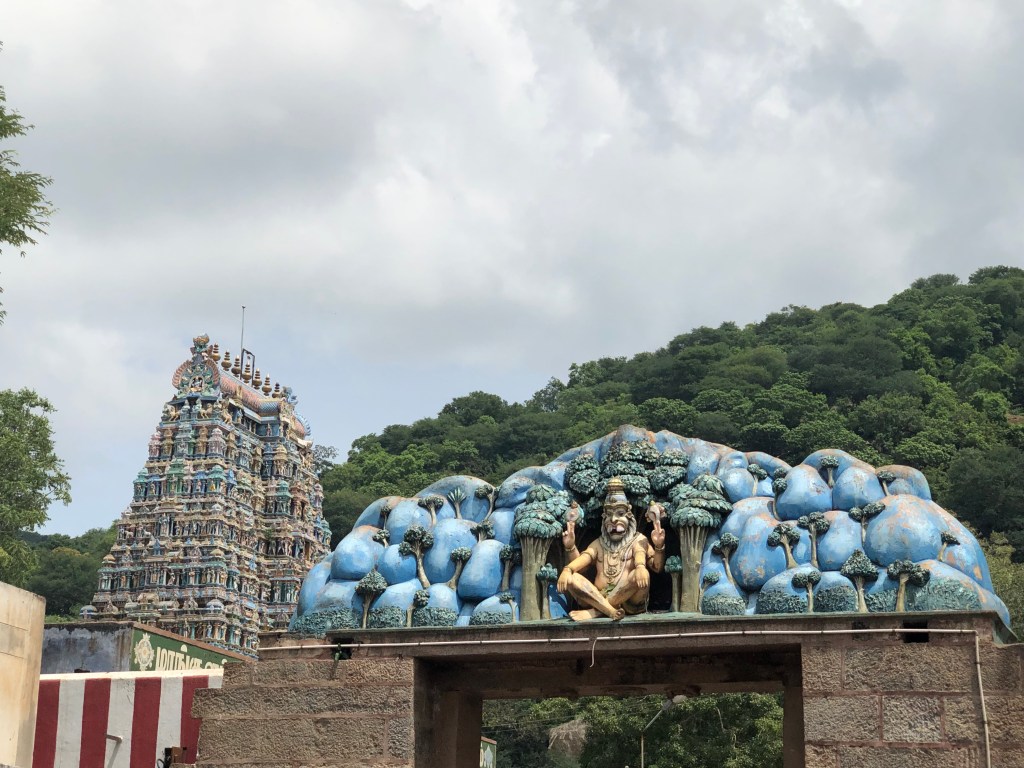
We started off our trip by visiting the famous Narasingam Sri Yoga Narasimhar temple which is about 8km from Madurai city on the road to Melur. Even though this is not a Divya Desam, this temple nestled in the Yaanamalai hills has immense historical significance. The moolavar vigraham of Swami Yoga Narasimhar is magnificient and is about 6ft in height. The Thaayar here is Narasingavalli. This place is a definite must visit because of its beautiful surroundings including the beautiful kovil kolam (temple tank).
Thirumohoor Sri Kalamegaperumal kovil Image courtesy – Google images Copyrights belong to the respective image owner/s
Next up, we were off to the famous Thirumohoor Kalamegaperumal kovil which is situated on the same Melur road. Apart from being a Divya Desam, this temple is world famous because of the Chakrathazhwar (the divine discuss of Lord Mahavishnu) sannidhi. This Divya Desam is part of the Pandiya naatu Divya Desams. There are nearly 12 Pasurams dedicated to this Divya Desam that have been sung by Nammazhwar and Thirumangaizhwar.
Thirukoshtiyur Soumyanarayana Perumal Kovil Image courtesy – Google images Copyrights belong to the respective image owner/sThirukoshtiyur Nambigal Thirumaligai (divine home) Image courtesy – shot on my iphoneRamanujar upadesam aana ull (The room where Swami Ramanuja got his mantropadesam from Swami Thirukoshtiyur Nambigal) Image courtesy – shot on my iphone
Our next stop was Thirukoshtiyur Soumyanarayana Perumal temple at Thirukoshtiyur. This is another Divya Desam which was sung by four Azhwars including Periazhwar, Thirumazhisai Azhwar, Boothathazhwar and Peyazhwar. This temple has immense significance as this is the place where Swami Ramanuja got the ashtaakshara ragisaya upadesam from Sri Thirukoshtiyur Nambigal, who was one of the prime sishyas of Swami Aalavandhar. It is said that Thirukoshtiyur Nambigal made Swami Ramanuja travel atleast 18 times from Srirangam to Thirukoshtiyur before finally imparting the upadesam. Many upanyasakars have given a separate lecture on these 18 trips Swami made called the “18 ragasiyangal” or 18 secrets where it is said that the 18 trips made were for Swami to drop 18 different kinds of physical and emotional attachments before getting the upadesam. These days we are lucky to have motor transport but imagine during Swami Ramanuja’s time, he had to cover this entire distance by foot from Srirangam to Thirukoshtiyur. Nambigal also warned Swami Ramanuja not to impart this mantra or its significance without adequately testing a disciple or anybody who yearned to know it. As soon as Swami Ramanuja got the upadesam, he went right on top of the temple tower and called out to the everybody in the village regardless of their caste, creed, varna etc who are interested in Mukti to come and learn the significance of the holy ashtakshara mantram. Knowing that Swami Ramanuja had defied his orders, Thirukoshtiyur Nambigal was extremely furious and cursed him that he would go to hell for defying his orders. Swami said that he would gladly be willing to go to hell and would not mind it if even 10 people can attain mukti. Such was Swami’s magnanimity. Thirukoshtiyur Nambigal was extremely moved by this gesture of Swami and hence gave him the name “Emberumanar” meaning are you my Lord? Even today devotees can go to the same place where Swami Ramanuja stood and called out to devotees to learn this secret. You would find a guide on top of the gopuram who would claim that Swami Ramanuja had screamed out the ashtakshara mantram but that is not true and has been refuted by many famous upanyasakars like Velukkudi Swami and Dushyanth Sridhar. He only gave the meaning of the mantra but not the mantra itself. To obtain the mantropadesam, one has to approach an Acharyan (for eg: Pontiff of a mutt like Ahobila Mutt or Andavan Ashramam) i.e one of the 74 Simhasanathipathis who have been nominated by Swami Ramanuja, who alone have the right to impart the mantra during the process of Samashrayanam. We also had the privilege of visiting the thirumaligai (divine home) of Thirukoshtiyur Nambigal which still exists (approximately 1000+ years old) very close to the temple. I have posted pictures of the outside of the house and the room where Nambigal imparted the divine mantra and its meaning to Swami Ramanuja. The descendants (vamsavali) of Nambigal are still there even today and are taking care of this very important place which holds a lot of significance for many Sri Vaishnavites. Standing in the same room where Swami got his upadesam is an unexplainable experience and thanks to his grace, we were able to visit this holy place. I would request everybody visiting this temple to visit Nambigal’s thirumaligai as well. You can ask anybody in the temple and they will guide you to his house.
Pillaiyarpatti Sri Karpaga Vinayagar Temple Image Courtesy : Google images Copyrights belong to the respective image owner/s
After Thirukoshtiyur, we did not know if we had enough time to make a run to Pillayarapatti Sri KarpagaVinayagar temple. Unfortunately, I could not take any pictures of my own as cameras are not allowed inside the temple and I almost got caught when I tried to stealthily take a picture inside :). This is a beautiful temple built by the Pandya Kings and one of my most favorite Pillaiyar temples.
Once we finished Pillaiyarpatti, we decided to break for lunch because the next temple we were going to go required some energy both physically and mentally. It is a temple that is very close to my heart. It is none other than Srivilliputhur.
Srivilliputhur Sri Andal Sri Rangamannar Kovil Image courtesy – shot on my iphone
Srivilliputhur Rajagopuram Image courtesy – shot on my iphone
As soon as you reach the precincts of Sri Andal Sri Rangamannar kovil, the first thing that strikes you is the imposing gopuram. There are two temples inside this complex, one is Sri Andal-Rangamannar temple and the other one is Sri MahaVishnu temple where Perumal is known as Vatapatra Sayee. Srivilliputhur is around 80km from Madurai and can be covered by road. It is again a Divya Desam and has the distinction of having housed 2 azhwars. One is Periyazhwar who was also known as Vishnu Chitthar and his daughter, Sri Andal Nacchiar. Legend has it that Periyazhwar used to string garlands for the lord of Srivilliputhur. He was childless and hence yearned for a child. Perumal granted his wish when Periazhwar found a girl child under the Tulasi maadam in the garden of the temple. This Tulasi maadam is still there today for everyone to see. He lovingly named the girl child as Kothai. Kothai was a great Krishna bhakthai from birth and she wanted to marry Lord Ranganatha. Once she wore the garland that had been strung together for the lord by her father who unknowingly presented it to the lord. When he came to know that Kothai had worn the garland meant for the lord, he was very upset. The lord then appeared in azhwar’s dream and told him that he would accept only the garland worn by Kothai going forward. This tradition is followed to this day. One may or may not know the divya prabandhams but there are many people who know the Thiruppavai pasurams by heart which is recited in every household during the month of margazhi (December 16th to January 15th). Andal has the distinction of being the only Lady Azhwar among Azhwars and has given us two beautiful literary gems in Thiruppavai and Nachiyar Thirumozhi. Andal is known by many names like Kothai, Godha etc… Swami Desikan’s dedication of the Godha Stuti in praise of Andal where he starts off by addressing her as “Sri Vishnu Chittha kula nandana kalpavallim” resulting in 29 beautiful verses in praise of Godha when Swami Desikan had visited Srivilliputhur is an absolute treat to the ears and soul. Srivilliputhur is also known for the world famous Srivilliputhur palkova which has also acquired the GI (Geographical Indication) tag now. One can find many shops inside and around the temple premises, each saying they have the most authentic palkova in Srivilliputhur. Of these, the Venkateswara Vilas Lala sweet shop is one of the most famous and authentic places to get tasty palkova. Go and get your hands on a packet and enjoy this wonderful sweet if you are a fan. I did 🙂
Thiruthangal Sri Ninra Narayana Perumal Kovil Image courtesy – shot on my iphone
Once we finished Srivilliputhur, we wanted to sign off the day by visiting one more Divya Desam which was close by. This was the Sri Ninra Narayana Perumal temple in Thiruthangal which is located around the outskirts of Sivakasi. The Perumal here is called Ninra Narayanan and the thaayar here is called Sri Arunakamala Mahadevi. This is again a Divya Desam and pasurams praising the perumal in this temple were sung by Sri Boothathazhwar and Thirumangai Azhwar. The temple has a beautiful 3-tier architecture, where there is Perumal in a reclining posture in the lower tier, Thaayar in the second tier and Sri Ninra Narayanan in the top most tier in a standing position. This was a fantastic temple which was not even on our list but one that was decided in the last minute. Well, we did not decide anything but it was just Perumal’s infinite grace and blessings and he decided to give us his darshan. What an end to a wonderful day!
After Thiruthangal, we decided to call it a day and get a good night’s sleep as we had a very long day the next day and also a very important day. It was time for us to head to Nellai. The land of the great Tamarabarani river. The abode of Lord Nellaiappar Swami and Kanthimathi Amman. The one and only “Thirunelveli”. The distance from Thiruthangal to the hotel we stayed in is about 100 kms and takes a good 2 hours. The highway is just brilliant so am sure you will enjoy the drive. We stayed at Hotel Aryaas. It was quite affordable and we took a deluxe room since we had to get a good night’s sleep to cover the next day. The food was pretty decent but folks not interested in hotel food may want to slip out to try the local flavors. The hotel is centrally located and local joints can be accessed easily.
Sri Vaikuntam Sri Vaikuntanatha Perumal Temple Image courtesy – shot with my iphone
We started off the next day with our Nava Thirupati tour. The Nava Thirupati temples are nine Divya Desams in Thirunelveli which are all within a short radius. Every single temple which is part of the Navathirupati would have a map of all the nine Thirupati’s for easy reference like the one below.
Nava Tirupathi route map
The first temple we covered was the Sri Vaikuntam Sri Vaikuntanatha Perumal temple. The Perumal here has another name called Sri Kallapiraan. The Thaayar is known as Vaikuntavalli Thaayar. Since the day we planned (or rather did not intentionally plan) for this visit was on a purattasi Sani (Saturday), all the temples were crowded to the hilt. The point is note is that, when there are no festivals that happen, the temples are rarely crowded and are mostly empty. It was luck that we got to see Perumal and Thaayar in their full splendor in all the 9 temples resplendent in their thangam/velli kavacham for the moolavar and beautiful alankaram for the Archya vigraham. Nammazhwar has sung on the lord of this temple. I would also suggest taking some time out to see the beautiful architectural works in this temple. It is a visual treat.
Thiruvaragumangai Sri Vijayasana Perumal Temple Image Courtesy – Google images Copyrights belong to the respective image owner/s
The next temple we visited after Sri Vaikuntanatha Perumal temple was Thiruvaragunamangai Sri Vijayasana Perumal temple. This temple is on the Tiruchendur-Tirunelveli road. The distance between SriVaikuntam temple and Thiruvaragunamangai temple is only 1.8km and should take you roughly 10 minutes to reach. When we arrived at this temple, a place that is normally empty was throbbing with so many people that we found it tough to get a parking spot for our car. It was because of Purattasi Sani and everybody had come to celebrate this wonderful day with Perumal. It was a miracle that we were able to quickly go through the massive crowd and get a wonderful darshan of Perumal and Varagunavalli Thaayar.
Thirupuliyangudi Kasiniventhan Perumal Temple Image courtesy – Google images Copyrights belong to the respective image owner/s
After an unexpectedly wonderful darshan of Sri Vijayasana Perumal and Thaayar we next moved on to Thirupuliyangudi Sri Kasiniventhan Perumal temple. Here Perumal is in a beautiful sayana thirukolam reclining on Adi Seshan with Sri Mahalakshmi and Bhoomadevi at his feet. This Perumal is also known as Sri Bhoomipalagar. The temple is around 5km from Srivaikuntam temple and just 1.2km from Sri Vijayasana Perumal temple. It is again part of the Nava Thirupathi temples and Nammazhwar has sung nearly 12 pasurams in praise of this Perumal.
Thenthiruperai Sri Makaranedunkuzhai Kather Perumal Temple Image courtesy – Google images Copyrights belong to the respective image owner/s
The next temple we visited was Thenthiruperai Sri Makaranedunkuzhai Kather Kannan Perumal temple. The Perumal in this temple is in amarntha (seated) thirukolam. Thaayar is know by Thirupperai Naachiyar. As it is part of the Navathirupathi sthalams, Nammazhwar has sung nearly 11 pasurams in the praise of the Lord in this temple. We went by a specific order of temples prescribed and did not necessarily go by the distance. Normally if you take a cab or a taxi, you might be routed through the shortest distance from one temple to another but since we were using a personal vehicle, we followed the same order in which am sharing details here. The distance from Thiruvaragunamangai temple to this temple would be around 11km and can be covered in roughly 15-20 minutes.
Thirukkulanthai Mayakoothan Perumal Temple Image courtesy – Google images Copyrights belong to the respective image owner/s
The next temple we visited was Thirukkulanthai Mayakoothan Perumal Temple. Perumal here is Srinivasa Perumal and Thaayar’s name is Alarmel Manga Thaayar. Like Thirupathi, Perumal is in ninra (standing) thirukolam. Nammazhwar has sung one pasuram in praise of this Perumal. This distance between these 2 temples is around 10 kms and will take about 15 mins to reach. Please note that since it was a Purattasi Sani (Purattasi Saturday), luckily for us all the temples were open throughout the day without any break which helped us cover all the Nava Thirupathi temples comfortably.
We then decided to take a break for lunch and were told that there was a Hotel Saravana Bhavan (HSB) close by. We were then told about the Vanathirupathi temple built by the Saravana Bhavan owner that has the HSB attached. However, we did not have time to go to the temple but had a good meal at HSB. I would suggest asking the locals there and they can provide directions to this place.
After a good lunch, we moved on to what is known as the Rettai Thirupathi or 2 Divya Desams almost adjacent to each other.
Tholaivillimangalam Aravindalochana Perumal Temple Image courtesy – Google images Copyrights belong to the respective image owner/s
The first of the Rettai Thirupathi temples is Sri Aravindalochana Perumal temple. The name of the Thaayar is Karunthadankanni Thaayar. The Perumal vigraham is made of Saligramam which is significant. Being a part of the Nava Thirupathi, the lord of this temple has been praised by Nammazhwar in his Thiruvaimozhi pasurams.
Tholaivillimangalam Devapiran Perumal Temple Image courtesy – Google images Copyrights belong to the respective image owner/s
The second of the Rettai Thirupathi temples is Sri Devapiran temple which is almost in the same compound as the Aravindalochana Perumal temple. Here Perumal is in Nindra thirukolam (standing posture). Nammazhwar has sung in praise of the Lord of this temple as well in his Thiruvaimozhi pasurams.
Thirukolur Sri Vaithamanidhi Perumal Temple Image courtesy – Google images Copyrights belong to the respective image owner/s
As we were approaching the last leg of the Nava Thirupathi temples, we were approaching two of the most important temples. The last but one being Thirukolur Sri Vaithamanidhi Perumal Temple. Thirukolur is famous and blessed as well as it is the birth place of Sri Madurakavi Azhwar. The Perumal in this temple is known as Sri Vaithamanidhi Perumal and is in a beautiful reclining posture. Thaayar is known as Kumudavalli or Kolurvalli Thaayar. Swami Nammazhwar has sung nearly 12 verses in praise of the Lord of this temple. At this juncture, we have to pay our obeisances to Sri Madurakavi as he was the one who I can say was instrumental in making the first notes of the Naalayira Divya Prabhandam (4000 divine hyms), namely the Thiruvaimozhi as it poured out of Nammazhwar who was in perpetual divine ecstasy. It is interesting to note that even though Madurakavi was born in Thirukolur, he had to almost do a full round of India before he landed in Azhwarthirunagari in the presence of his guru Nammazhwar. The story goes like this. Madurakavi (before he became Madurakaviazhwar) was born in Thirukolur in to a wealthy family. At one point of time in his life, he decided to drop all worldly attachments and dedicate his life to Perumal and work towards attaining moksha. He started on a pilgrimage all over the country and reached Ayodhya. One evening as he was doing his Nityakarma in the holy Sarayu river, he noticed a ball of fire in the sky. Not having a clue on what it was, he felt somehow that he was drawn to it but as and when he got closer, the fireball started to move southward. Finally, it vanished inside the Thirupuliadi maram (Holy Tamarind tree) at Azhwarthirunagari. Inside the hollow of the Tamarind tree sat a young yogi. Not knowing if the yogi was alive or not, Madurakavi dropped a stone right next to the boy. For the first time in 16 years, Nammazhwar opened his eyes. Madurakavi asked the question that had been eating his brains all these years. He asked – “Seththaththin vayiRRil siRayadhu piRandhaal eththai thinRu engE kidakkum?” to which Nammazhwar answered “Athu atthai thindru angey kedakkum”. The question asked was if the subtle soul is embodied in the gross body what will be its actions and thoughts? Nammazhwar’s answer meant that if it identifies with the gross body, then it will eat and continue to rest there but if it serves the divine, it will only eat and think of the Lord. Madurakaviazhwar then proceeded to make notes of the Thiruvaimozhi pasurams as they poured out of Nammazhwar who was in a constant state of ecstasy. He also wrote 11 verses in the praise of his guru Sri Nammazhwar titled “Kaninun Siruthambu” which are today part of the 4000 divya prabandhams. Nammazhwar decided to leave his mortal body and proceed to Srivaikuntam at the young age of 32 years. A grief stricken Madurakaviazhwar pleaded with his guru to leave him with some form of his guru’s remembrance as he was clueless on what to do next. Nammazwhar asked Madurakaviazhwar to make an earthen pot from the banks of the Thamaraibarani river and boil the river water in it and mentioned that an idol would emerge from it. As instructed, when Madurakaviazhwar boiled the water, a beautiful vigraham (idol) emerged from the boiling water but it did not resemble Nammazhwar but of a different Acharyan. Nammazhwar then told him that it was the vigraham of Swami Ramanuja and told him that he would be the “Bhavishyadacharyan” or the guru of the future who would lead Sri Vaishnavism and would be born after about 4000 years. He then asked him to repeat the process and this time a beautiful vigraham of Nammazhwar emerged from the boiling water. We can still worship this beautiful vigraham of both Sri Nammazhwar and Swami Ramanujar at Azhwarthirunagari.
Azhwarthirunagari Sri Adinatha Azhwar Perumal Temple Image courtesy – Google images Copyrights belong to the respective image owner/s
Finally, we reached the pinnacle of all the Nava Thirupathi temples and that is the Azhwarthirunagari Aadhi natha Perumal temple. The Perumal Sri Adinathan is in ninra tirukolam (standing posture) and the Thaayar is Adinaatha Valli Thaayar. Sri Nammazhwar who resides in this temple has dedicated nearly 11 verses to the lord of this temple. I can go on and on about Nammazhwar, who was rightly proclaimed as the Thalamai Azhwar (Head of Azhwars) by Lord Sriman Narayanan himself and rightfully so. One of the great Sri Vaishnava Acharyans Sri Manavalamamunigal praised Sri Nammazhwar thus “Undo vaigaasi visaagathukku opporu naal, undo Sadagoparakku opporuvar, undo thiruvaimozhikkuoppu, then kurigaikundo oruppar thannil okkumoor” which translates to “Is there any star that can match the auspicious stature of Vaigasi Visagam?”, Is there anybody who can match the glory of our Kulapathi Sri Sadagopan (Sri Nammazhwar)?, Is there any divyaprabhandam that can match the Thiruvaimozhi?, Can there be a Divya Desam that can match the auspiciousness of Thirukurugoor that has given birth to our Nammazhwar?”. Standing in this temple after reading and hearing so much about Nammazhwar was a surreal experience for me. Nammazhwar was born in a “Mallar” kulam family. As a child, he was different than normal children as he did not cry, did not drink milk or show any normal qualities that a child would display. Upanyasakars interpret it in this way. They say that when any baby is in it’s mother’s womb, it is in a yogic state and one with the paramatman. The moment it is about to come out of the womb it is engulfed by the outside worldly atmospheric air called “Shatam” post which the attachment to this life starts. Apparently Nammazhwar when he was about to be engulfed by this air, kicked it in anger and hence was born differently. Since he kicked the “Shatam” angrily, he was called “Satakopan” and as he was different from the normal ways of the world, he was also called as “Maaran”. The Sri Shataari that we have in temples today is named after him. His parents not knowing what to do with him, left him at the holy feet of Sri Adinatha Perumal at Thirukurungudi which is modern day Azhwarthirunagari. The child then crawled and got in to the hollow of a Tamarind tree or the Thirupuli adi maram as it is known today.
Azhwarthirunagari Thirupuliadi maram Photo courtesy – shot on my Iphone
He sat in a lotus posture in the hollow of this very tree you see above and meditated for nearly 16 years before he was awakened from his yoga nidrai by Sri Madurakaviazhwar. It was in this very place that Swami Nammazhwar contributed to nearly 1296 verses of the 4000 divyaprabhandams. His works include the Thiruviruttam (100 verses), Thiruvasiriyam (7 verses), Periya Thiruvanthathi (87 verses) and the Thiruvaimozhi (1102 verses). These four works are considered the equivalent of the four Vedas, Rig, Yajur, Sama and Atharvana. It is also believed that Swami Nammazhwar did not move an inch from the hollow of the Tamarind tree but has the distinction of having all the deities of the Divya Desams visit him at this place to get their share of the pasurams sung by him in their praise. Sri Nammazhwar decided to leave his mortal coil at the young age of 32. Thanks to him, we have his beautiful Archya vigraham that Madurakaviazhwar made based on his instructions which I have spoken about in my previous temple (Thirukolur) description. It is said that when Swami Nammazhwar went to Sri Vaikuntam after shedding his mortal coil, Lord Sriman Narayanan himself opened the doors for him. My sincere wishes and prayers that everybody visit this place atleast once in their lifetime to get the divine blessings of Swami Nammazhwar.
After a fantastic and blissful day, we decided it was time to head back to Madurai. It had been a hectic day but we loved every minute of it. Finishing the Nava Thirupathi’s on a single day, that too on a purattasi sani was purely due to the grace and the blessings of Perumal, Thaayar and of course all our Azhwars and Acharyans. We decided to take a hotel close to the Madurai railway station as we were taking a train back that night. We found a decent hotel called Hotel Supreme. It was good enough for a single night. They also have a roof top restaurant which gave us a nice view of the Meenakshi Amman temple. The food was pretty average though so if you want to taste outside food, there are many restaurants close by.
Sri Koodalazhagar Temple Image courtesy – shot with my iphone
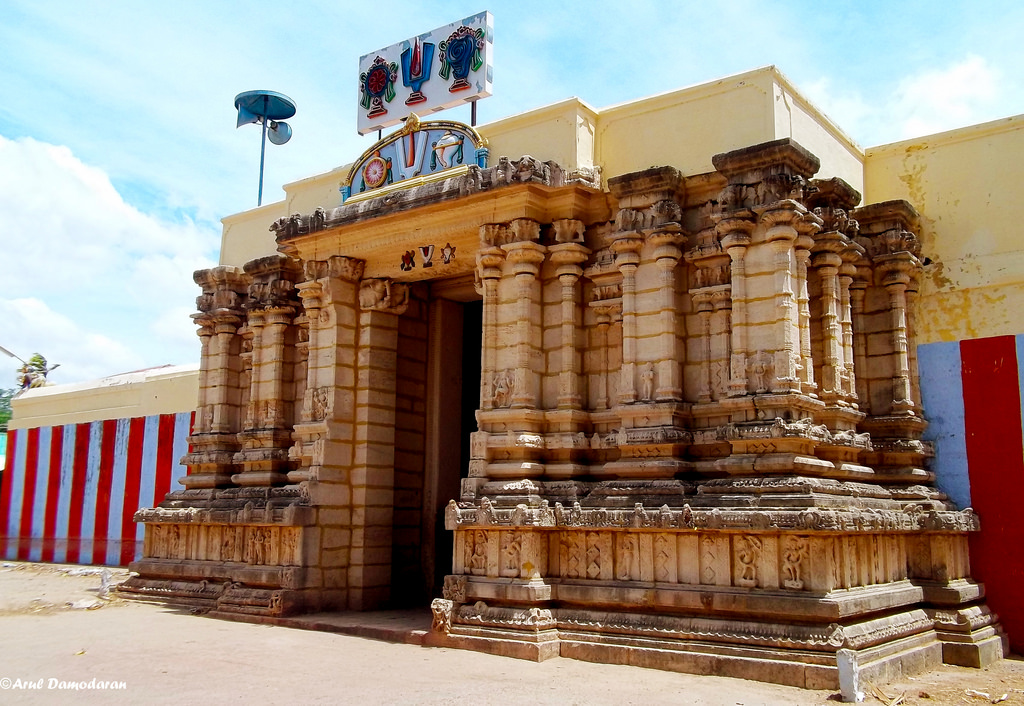
We wanted to keep the last day a little less hectic as we had some important temples to cover. The first temple that we visited was the Koodalazhagar temple. Thirumangaiazhwar has sung a pasuram in praise of this Perumal. It is a magnificent temple where Perumal is in three different forms in a three tiered architecture. Perumal is in nindra (standing), amarntha (sitting) and kedantha (reclining) thirukolams. The name of Thaayar is Mathuravalli Thaayar. The amarntha thirukolam is huge and is at a height of around 6ft. There is a Swami Desikan Sannidhi situated very close to the Koodalazhagar temple but before we could finish our darshan and go there, it was closed for the morning. We were told that the Desikan Sannidhi is open only till 10am in the morning so anybody planning to go there, kindly plan accordingly.
Madurai Sri Kallazhagar Temple Image courtesy – shot on my iphoneMadurai Sri Kallazhagar Temple Image courtesy – shot on my iphone
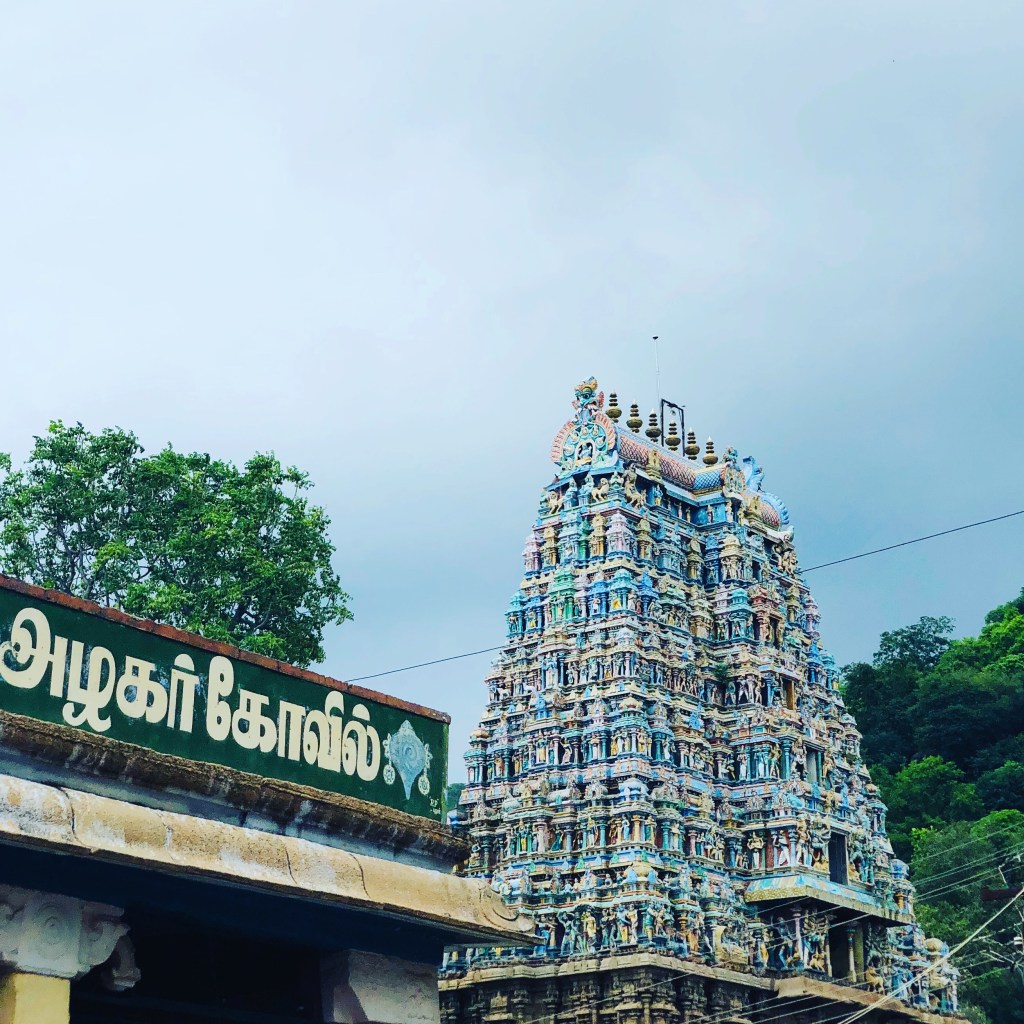
The next temple holds a great degree of significance for all Vaishnavities and especially the residents of Madurai. The very mention of the name “Azhagar Koil” can give goosebumps to any Madurai native. The perumal is known by many names, the most famous being Azhagar. His other names include Paramaswami, Sundararajan, Sundaratholudayaan, Maalirum Solai Nambi etc.. Thaayar is known as Sundaravalli Thaayar. It is said that if Periyaperumal (The Lord of Srirangam) is the most beautiful in sayana kolam (reclining posture), then Azhagar, symbolic of his name is the most beautiful form of Perumal in ninra kolam (standing posture). This temple is a part of the 108 Divya Desams and there are many Azhwars who have sung in the praise of the Perumal of this temple. There are a totally 128 pasurams that reference the lord of this beautiful and divine Divya Desam. Boothathazhwar has sung 3 pasurams, Peyazhwar has sung 1 pasuram, Nammazhwar has sung about 46 pasurams, Periyazhwar has sung about 34 pasurams, Andal has sung 11 pasurams and Thirumangai azhwar has sung 33 pasurams. Apart from Azhwars, many acharyans have graced this beautiful temple. Sri Koorathazhwan, who was the right-hand of Swami Ramanujar, and who stayed in this Divya Desam for a long time when Swami Ramanuja had to go to Melkote due to the harassment at the hands of the Chozha king, has composed the beautiful SundarabAhu Sthavam in praise of Swami Kallazhagar. The image of Kallazhagar getting in to the Vaigai during the Chithirai festival is now a well-known phenomenon not only for the people of Madurai, but also for many devotees around the world who throng Madurai in lakhs to watch this spectacle. I also hope to watch it one day :).
Pazhamudhircholai Sri Murugan Temple Image courtesy – Google images Copyrights belong to the respective image owner/s
Very close to Azhagarkovil is the beautiful Pazhamudhircholai Murugan temple which is one of the aaru padai veedu of Lord Murugan. This temple is supposed to be the last of the 6 temples in the Aaru padai veedu. There is a very famous story associated with this temple which all of us might have seen in the “Avvaiyar” movie or read about. It is said that Avvaiyar once visited Pazhamudhircholai and since it was very hot took refuge under the shadow of a fruit tree (Naaval pazham tree). A young boy sitting on the branches called out to her and inquired if she was tired and wanted some fruits. Avvaiyar said she would gladly accept them. The boy then asked her if she wanted “hot” or “cold” fruits. Avvaiyar for a second dismissed this statement by the boy as childish and asked him to just give her the fruits. The boy gently shook the branches and the fruits fell on the ground right below the tree. To blow the dust away, Avvaiyar blew on them. Seeing this, the boy asked her if the fruits were indeed hot and she was blowing them to cool them down. Avvaiyar then realized her folly of dismissing a young boy for his lack of knowledge and requested the boy to reveal his true identity. The boy revealed his true from as Lord Murugan with Valli and Devayanai. We had an excellent darshan here. The temple in itself is a very small temple but keep a watchout for the monkeys 🙂 There are plenty of them around.
Madurai Meenakshi Amman temple Image courtesy – Google images Copyrights belong to the respective image owner/s
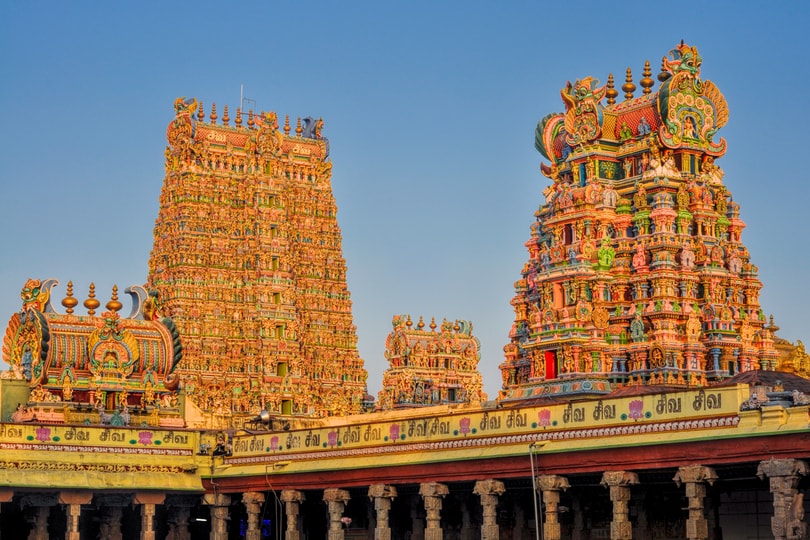
For the grand finale, how could we leave Madurai without seeing Goddess Meenakshi Amman. The magnificence of this temple is better seen than told because there are actually no words to describe its beauty. I have wondered many times as to why this temple has not been included in the 7 wonders of the world. This has to be the grandest jewel on the crown of the Pandya Kings who created this wonderful temple. We should bow our head not only to King Kulesakara Pandyan who built this wonderful temple and then to his lineage of Pandya Kings who not only maintained this beautiful temple but also to the Nayakars and the kings of the Vijayanagara empire who had to rebuild this beautiful temple after it was plundered by the evil Mughal king Malik Kafur. We owe a debt of gratitude and thanks to all these wonderful kings, many of whom gave up their lives to save some of these wonderful temples in South India even after they were plundered and looted to no end by the Mughal Sultanate and ensure future generations live to see these magnificent structures and pieces of art and architecture. Unfortunately, the current generation is yet to learn to appreciate the effort and sacrifices our great kings had to make while building these temples. As I always say, we do not need to build any more new temples. We have enough temples, many in dilapidated conditions which need our help. Let us also ensure we do not dirty these beautiful houses of god. We cannot even dream to dedicate one stone to these temples. The least we can do is to help maintain them through the little things we do like not throwing garbage in temples, writing dirty messages on temple walls etc.. Not to get too emotional but it pains to see that just like in life, we will never know the worth of something unless we lose it. Moving on, we had a wonderful darshan of Meenakshi Amman in her raja alankaram. We took a VIP darshan which costs around INR 500/person but it is absolutely worth it. Since this temple has faced multiple threats even in recent times, security is absolutely tight. You are not allowed to take your mobile phones inside the temple and have to deposit it outside. Due to lack of time, we just had a darshan of Meenakshi Amman, Chockanathan and the Meenakshi-Sundareshwarar wedding shrine. There is also a sannidhi dedicated to a Siddhar in the prakaram right next to the Durga sannidhi called “Yellam valla Siddhar”. The place was literally throbbing with high energy. Please do visit and if possible do light a lamp.
With that, our Madurai-Tirunelveli trip which was all of 2 nights and 3 days came to and end and we got on to our train (Pandian express again) at the Madurai station. It leaves Madurai at 8:40 pm IST and reaches Chennai Egmore at around 4:30am the next day morning. Finally, my long-term dream of going to Madurai was fulfilled. The next time I plan to spend some more time also trying to flavor some of the local delicacies which Madurai is famous for.
























 naarayanr